The indicators that earn their place on your chart
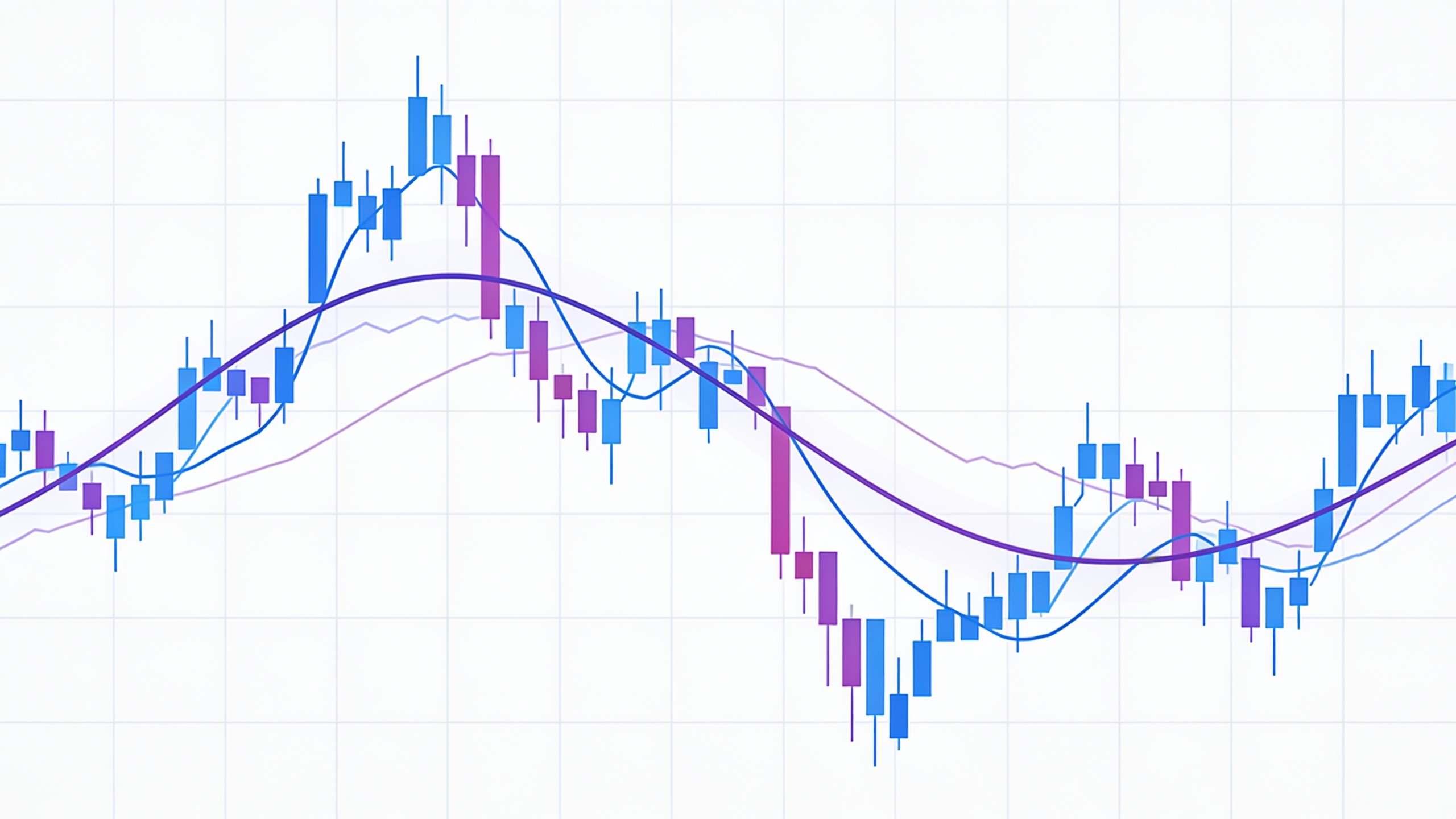
Open a beginner’s chart and you will often find a dozen indicators stacked on top of each other, three moving averages, two oscillators, bands, a volume study, each flashing its own signal. It looks sophisticated. In practice, most of those indicators are telling the same story in slightly different fonts, and the clutter makes decisions harder, not easier.
[01]Indicators are lenses, not oracles
Every indicator is just a transformation of price and volume, a lens that emphasises one property of the data. A moving average smooths trend; an oscillator frames momentum relative to a recent range; a volatility measure sizes the noise. None of them adds information that is not already in the price; they reorganise it so a particular pattern is easier to see.
[02]Choose one from each family
A useful discipline is to pick indicators from different families rather than several that measure the same thing. A trend measure, a momentum measure and a volatility measure between them describe direction, strength and risk, three genuinely different questions. Three moving averages, by contrast, mostly agree with each other and give a false sense of confirmation.
[03]Beware lag and repainting
Most indicators are built from past prices, so they lag by construction; the smoother they look, the later they turn. And be sceptical of any study that "repaints", that looks perfect in hindsight because it quietly revises its own past values. If a signal only appears once the move is over, it is describing history, not forecasting it.
[04]How a model uses them differently
An AI-assisted system does not treat an indicator as a hard on/off trigger. It can take several indicators as inputs and learn, from a great deal of data, how much weight each deserves in a given context, something far harder to hand-tune. The indicators still matter; the model just uses them as evidence to weigh rather than rules to obey.
This article is educational and illustrative, not financial advice. No indicator or combination of indicators guarantees a profitable outcome; decide your own approach and manage risk deliberately.